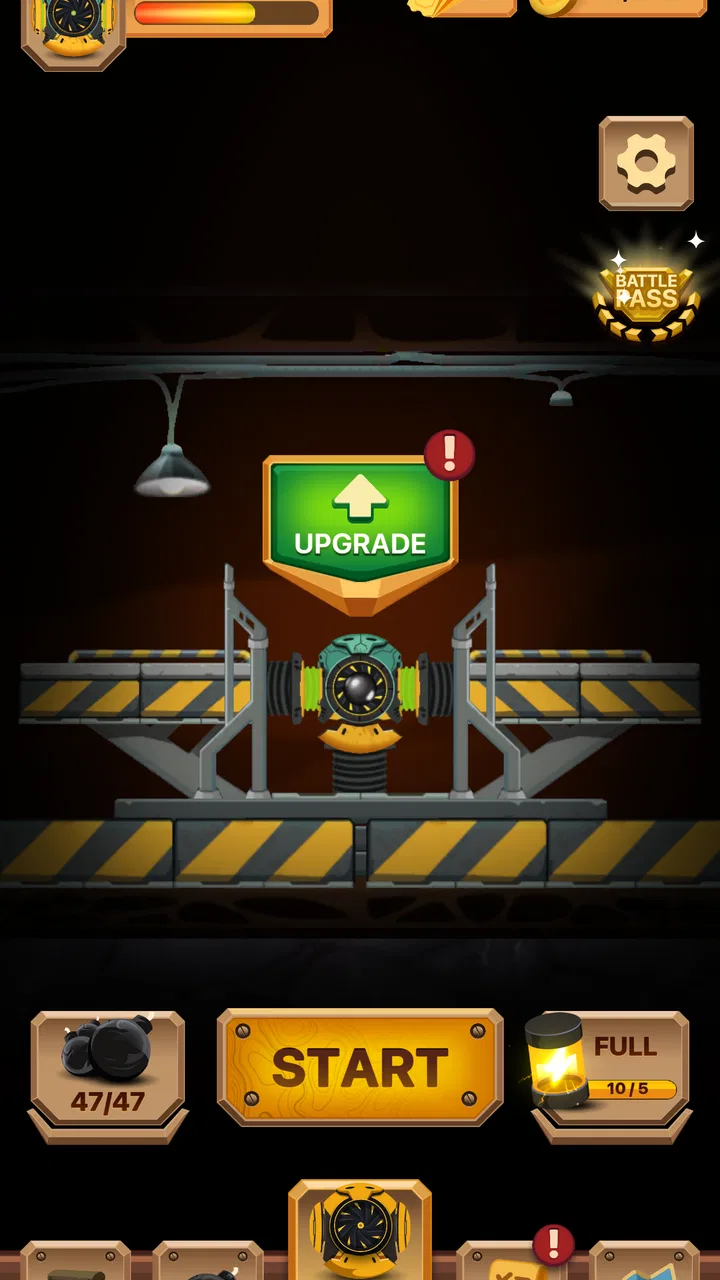
The Detonator: Blast & Mine
- 4.5
- Rating
- 1.00M
- Installs
- Free
- Price

 Analysis by App-foxy
I tried The Detonator: Blast & Mine as a short-session adventure game, and its central idea is easy to understand: dig through the earth, use explosions to open a path, and keep pushing toward better rewards. That simple loop makes it a natural choice for a shared phone or tablet, especially when someone wants a game that can be picked up without a long explanation. It is free to download, rated for Everyone, and comes from LootCopter Game Studio.
My first impression was that this is less about a carefully scripted adventure and more about the satisfaction of making progress one blast at a time. You are not being asked to memorize a complicated story before playing. Instead, the appeal comes from deciding where to break through, watching the underground space change, and turning a small amount of time into visible progress. That makes it approachable, although players looking for a deep narrative or a traditional platforming adventure may find it lighter than expected.
How it works when a household shares one device
When I share a device for a casual game, I find it helps to treat the handoff as part of the play rather than an interruption. A quick note about whose turn it is and what the current goal might be keeps the next person from feeling they have to guess at someone else’s intentions. That makes it easier to decide how to prepare the device and agree on boundaries before anyone starts.
You May Also Like

 Blood Strike: 2.5 Anniversary
Blood Strike’s Loadouts Turn Every Drop Into a Tactical Gamble
A close look at Blood Strike’s custom loadouts: how fast access to signature weapons reshapes its battle royale rhythm, rewards preparation, and narrows the gap between fights.

 Pandora - Music & Podcasts
Pandora’s Music Is Easy to Start, but Harder to Recover
Pandora’s strength is its low-effort path from a seed to a station. Its weak spot is how much confidence it asks you to place in connection, setup, and quiet recovery.

 8 Ball Pool
 Is Built on Rivalries, Rematches, and Routine
A close look at the rivalries, rematches, shared routines, and unanswered safety questions that turn a quick pool match into a persistent mobile community.

 Samsung Music
’s Quiet Strength Is Playing What You Already Own
Its reach comes less from spectacle than from dependable access to a personal library. That simplicity is both the app’s strongest retention engine and its ceiling.

 AccuWeather: Weather Radar
AccuWeather Review: A Quick, Clear Forecast for Everyday Decisions
For everyday plans, the best forecast is the one you can understand quickly. AccuWeather makes rain timing, radar, and local conditions easy to act on, with a few trade-offs.

 Hill Climb Racing
Why Hill Climb Racing Still Turns Crashes Into One More Run
A tiny car, a bumpy hill and one more upgrade: Hill Climb Racing keeps resurfacing because its simple chaos makes every near-miss feel personal.
More From Our News Desk
View All News


A good fit for quick turns and casual handoffs
The game works particularly well in a household where people take turns with the same device. One person can start a digging run, another can continue after the device is handed over, and the next player can see what has changed without needing a long tutorial from the previous player. That kind of shared use is where the straightforward mining-and-blasting concept has an advantage over more demanding adventure games.
I can imagine using it during a short wait, passing a tablet around after dinner, or letting a child play for a few minutes while an adult handles another task nearby. The action is easy to describe in ordinary language: find a route, blast through obstacles, and collect what the underground area offers. That clarity matters when several people use one screen and nobody wants to spend the first few minutes explaining controls.
There is also a useful difference between watching someone play and taking over yourself. The result of a blast is immediately visible, so a second player can understand the current situation quickly. In a shared-device setting, that reduces the frustration of inheriting a game state that only the original player understands. I still recommend saying out loud what the current goal is before handing over the device, because a casual game can become confusing if one player assumes the other knows which route or reward mattered.
Why the blast loop feels satisfying
The strongest part of the experience is the physical feeling of clearing space. Digging is not presented as a slow, abstract checklist; the explosive action gives each decision a little more impact. Even when the reward is modest, opening a new section creates a sense that the run has moved forward. That is the kind of feedback that keeps a casual player interested without requiring a large amount of free time.
My practical tip is to avoid treating every blast as an automatic button press. Look at the surrounding area first and think about what you are opening. In a game built around digging, the choice of where to spend an action is more important than simply acting as quickly as possible. A shared player can also learn from this: before making a move, briefly explain what you expect the explosion to achieve. That turns a handoff into coordination rather than a race to tap first.
The trade-off is that the same simplicity can limit long-term variety for some players. If your favorite adventure games depend on elaborate puzzles, character conversations, or a large world to explore, this title may feel focused rather than expansive. I see it as a compact activity built around excavation and rewards, not as a substitute for a story-heavy adventure.
What a realistic evening with the game looks like
Imagine a family sharing a tablet while waiting for food to finish cooking. One person opens a run and clears an initial path. Before passing the device, they point out the useful route and explain whether the next move is meant to reach a reward or simply open more space. A younger player then takes a turn, sees the result immediately, and hands it back when the household is ready to move on.
That scenario suits the game better than a long uninterrupted session in which one person expects a complex campaign to unfold. The compact loop gives everyone a chance to participate, but it also means the household should agree on whether progress belongs to one player or is being treated as a shared activity. Without that small agreement, the most enthusiastic player may make all the decisions while everyone else only watches.
Setup, boundaries, and coordination before playing
Before playing together, I would settle two practical questions: whether progress is shared and whether purchases need the device owner’s approval. Those choices can shape the mood just as much as the game itself, especially when different people have different ideas about experimenting with a blast or protecting a run. Once everyone knows the ground rules, coordination can stay relaxed and the attention can return to the digging.
Keep the first session simple
Because the game is free, it is easy to install and try without making a purchase decision first. It runs on Android 7.0 or later, which makes it accessible on a range of older compatible devices as well as newer ones. The current version is 1.6.3, so I would still check that the device has enough room and that the operating system meets the requirement before planning to use an older household phone.
For a shared device, I would begin with one short session rather than immediately letting several people play independently. The purpose is not only to learn the controls. It is also to establish who is allowed to make progress, whether the device is being used for joint play, and whether purchases are permitted. Those boundaries are especially important because the game includes in-app purchases ranging from $0.99 to $99.99 per item.
That purchase range changes how I would introduce it to a child or to anyone using a family-owned device. I would not hand over the device with the assumption that “free” means there is no financial decision involved. A simple household rule works better: play is allowed, but purchases require the owner’s approval. If the device is shared among adults, the same rule avoids accidental spending when someone is exploring the game for the first time.
Account boundaries matter even when play is casual
I would also separate the idea of device access from ownership of progress. If several people use one phone, the person who starts a run may feel that the progress is theirs, while another player may see the same run as a communal project. The game becomes more enjoyable when that expectation is settled early. Decide whether the household is building one shared adventure or simply taking turns with one player’s save.
This is not a complaint about the game so much as a practical point about shared devices. A casual adventure title can create disagreement precisely because it feels harmless. One person may want to experiment with a blast, while another wants to preserve a route or collect a particular reward. Agreeing on a “try anything” session versus a “protect progress” session prevents small disagreements from overshadowing the fun.
My preferred arrangement is to give the main player first choice over important decisions and let others suggest moves. On a family tablet, that keeps the game cooperative without pretending that every tap has equal importance. If the device is used by siblings, taking turns by run or by a clearly agreed section is easier than switching hands after every action.
Coordination makes the digging more enjoyable
The best shared sessions are not silent. Before a blast, ask what the player is trying to accomplish: open a route, reach a visible reward, or simply test what lies ahead. This small question creates a useful pause and helps younger players understand that the game rewards observation as well as tapping. It also gives adults a chance to guide without taking control of the entire session.
A second useful habit is to announce when you are about to make a risky or irreversible move. In a solo session, experimentation is part of the fun. On a shared device, however, another person may be invested in the current progress. A quick warning gives them a chance to agree, suggest another route, or accept that this run is intended for experimentation.
I found that this approach makes the game feel more social than its basic premise might suggest. It is not a multiplayer experience simply because people are watching the same screen, but the clear digging objective supports conversation. The household can discuss choices without needing to coordinate a complicated control scheme or divide attention between several characters.
Age context and trust
The Everyone rating makes the game an approachable option for a broad household audience, and its basic concept is easy for younger players to understand. Still, an age rating does not replace an adult’s judgment about spending, screen time, or how a particular child handles reward-driven play. I would introduce it as a game about making choices and exploring underground spaces, not as an unlimited source of rewards.
For younger users, I would play the first session together. That lets an adult see how the child responds to the digging loop and whether the pace encourages thoughtful decisions or repeated tapping. It also creates a natural opportunity to explain that the free download can contain optional purchases. Trust works better here when the rule is clear and calm rather than delivered only after a purchase prompt appears.
For older children and teenagers, the main issue is usually independence. They may understand the game immediately, but a shared device still creates questions about who can change progress and who can spend money. I would give them permission to play within a defined boundary, such as no purchases and no resetting another person’s progress. That is more useful than assuming that familiarity with mobile games automatically means careful use.
Adults may appreciate the game as a low-pressure way to fill a few minutes, but they should know what kind of entertainment they are choosing. This is not the right pick if you want a quiet reading-like adventure, a strategy game with extensive planning, or a cooperative title with separate player accounts. A different game is better when account separation, long-form storytelling, or formal multiplayer coordination is the priority.
How it compares with usual adventure alternatives
Compared with story-led adventure games, this one gets to its central action faster. There is less need to remember characters, dialogue, or a large map before you can enjoy a session. That makes it better for casual shared use, but weaker for players who measure an adventure by narrative depth and emotional investment.
Compared with puzzle-focused digging games, the explosive theme gives the action more momentum. You are not simply arranging pieces or solving a static challenge; you are opening the underground environment through direct action. The cost is that players who prefer carefully bounded logic puzzles may want more precision and less emphasis on the excitement of blasting.
Compared with endless casual games, the underground progression gives the session a clearer sense of purpose. You are not only chasing a high score in a repeated pattern. At the same time, the game remains more lightweight than a full role-playing adventure, so it is easier to share but may not hold the attention of someone looking for a large, persistent world.
Who should install it, and who should skip it
I would recommend it to players who enjoy short adventure sessions, visible progress, and the simple pleasure of clearing a path. It is especially suitable for a household that wants one approachable game on a shared Android device and is willing to set purchase rules before play begins. The free entry point also makes it reasonable to test without committing to a paid download.
I would be more cautious about recommending it to anyone who dislikes in-app purchase systems, even when they plan not to buy anything. The available item prices reach as high as $99.99, so the household should treat spending controls as part of the setup rather than an afterthought. I would also steer story-focused players toward a narrative adventure instead, and players seeking formal cooperation toward a game designed around multiple accounts or simultaneous participation.
Another group that may want to skip it is anyone who needs a game with clearly separated personal profiles on one device. Shared progress can be convenient, but it can also blur ownership of decisions. If that boundary is important to you, choose an experience that makes individual saves and account switching central features.
My household verdict
The Detonator: Blast & Mine succeeds because it gives a shared screen an immediate purpose: find a way through, make a blast, and see what the earth reveals. I like that a new player can understand the basic idea quickly, while a more experienced player can still make better decisions by observing the route before acting. That balance makes it friendly for mixed-age households without making it completely mindless.
Its limitations are equally clear. The compact action loop will not satisfy everyone, and the presence of in-app purchases means “free” should never be treated as a complete household policy. The game also works best when players agree about progress and turns. Without that coordination, a simple shared activity can become a source of arguments over who made the important move.
After using it, my advice is to install it when you want an accessible adventure game for short sessions and shared-device play, then establish the rules before handing it to someone else. Keep purchases subject to approval, decide whether progress is personal or communal, and encourage players to explain their intended blast before acting. The best reason to try it is its clear, satisfying digging loop; the main reason to be selective is the need for sensible spending and progress boundaries.
LootCopter Game Studio has built something that is easy to recommend to the right audience rather than to everyone. With an average rating of 4.3 from around 13 thousand ratings and more than 500 thousand installs, it has clearly found a broad casual audience. I would call it a good household-friendly adventure experiment, particularly for people who enjoy taking turns and making quick decisions, but I would choose a different game when personal accounts, deep storytelling, or structured multiplayer are essential.
FAQs for The Detonator: Blast & Mine
01What kind of gameplay does The Detonator: Blast & Mine offer?
The Detonator: Blast & Mine is a strategic puzzle game that challenges players to use explosives to clear levels. With a variety of bombs and obstacles, each level requires careful planning and precise timing. The game combines elements of strategy and physics-based puzzles to keep players engaged.
02Is The Detonator: Blast & Mine free to play, and are there in-app purchases?
The Detonator: Blast & Mine is free to download and play. However, it offers in-app purchases for players who wish to enhance their gaming experience. These purchases can include additional bombs, hints, or cosmetic items, allowing players to progress more easily or customize their gameplay.
03What are the system requirements for The Detonator: Blast & Mine on Android and iOS?
For Android, The Detonator: Blast & Mine requires at least Android 5.0 or higher. For iOS, the game requires iOS 10.0 or later. Both platforms recommend a minimum of 150 MB of available storage space to ensure smooth gameplay and optimal performance.
04Does The Detonator: Blast & Mine offer multiplayer features or online connectivity?
The Detonator: Blast & Mine focuses primarily on single-player gameplay. While it doesn’t offer traditional multiplayer modes, players can connect online to share their achievements and high scores on social media, fostering a competitive spirit among friends and other players.
05Are there any accessibility features available in The Detonator: Blast & Mine?
The Detonator: Blast & Mine includes several accessibility features to enhance the gaming experience for all players. These features include adjustable difficulty levels, colorblind mode, and customizable controls. The developers are committed to making the game as inclusive as possible.
Pros
- Intuitive controls for easy gameplay.
- Diverse levels with increasing challenges.
- Vibrant graphics enhance user experience.
- Regular updates with new features.
- Offline mode available for on-the-go play.
Cons
- In-app purchases can be costly.
- Occasional ad interruptions.
- Battery usage is relatively high.
- Limited customization options.
- Some levels feel repetitive.

The Detonator: Blast & Mine
Gallery